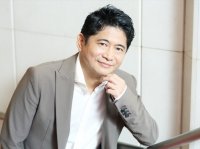
| [INTERVIEW] Actor Seol Kyeong-gu (Part 1) (Source) |
2010/01/11 |

Actor Seol Kyeong-gu [Beck Una/10Asia]
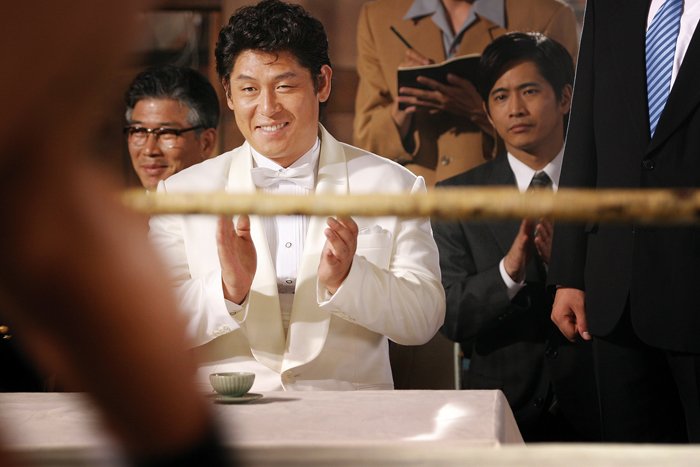
Seol Kyeong-gu (Seol): Wow, it's been such a long time. I came here today with the thought of meeting an old friend, not to do an interview. Was the last time we met for an interview for "Rikidozan"? At the trailer on set in Bucheon? Beck Una (Beck): Yes, you remember. That was the last time.
Seol: Ha... That's when I started going through rough times. "Rikidozan" flopped (laugh), I didn't have any work for eight months after that and then tried frantically to lose weight in a month to shoot "Another Public Enemy", going into a state of panic. You can guess how I was fro... |More
|
|
| [INTERVIEW] Actor Seol Kyeong-gu (Part 2) (Source) |
2010/01/11 |

Actor Seol Kyeong-gu [Beck Una/10Asia]
Beck Una (Beck): And that is when you decided to take the civil service examination. Seol Kyeong-gu (Seol): Haha. Let me explain that to you. I was dying to leave the Hanyang Repertory. I'd already graduated but that place was an extension of school while I wanted to meet a larger variety of people. I didn't think they'd let me go for no reason so I lied that I'm going to take the civil service exam. (laugh) But what's so spontaneous about me is that although I had left because I didn't like it, I didn't have anything to do right away. And I needed mone... |More
|
|
| [INTERVIEW] Actor Seol Kyeong-gu (Part 3) (Source) |
2010/01/11 |

Actor Seol Kyeong-gu [Beck Una/10Asia]
Beck Una (Beck): "Haeundae" is actually on weird coordinates in terms of your filmography. In comparison to your past films which had a single main character, "Haeundae" was a film which didn't necessarily need you to be part of. On top of that, director Yoon JK is known for creating commercial films. So I've been curious to know how you got to work on this film. Seol: I was once asked which director I work best with. To that I answered, "None of them". I make things work. "Haeundae" seemed like a movie calling for trouble. Like it would become a massive hit or flop horribly. Director Yoon may seem smart and cle... |More
|
|
| [DVD Review] This film's irony ends with the title (Source) |
2007/02/07 |
Song Hae-seong's "Our Happy Time" is full of dialogue that sound like quotes from the British dramatist Oscar Wilde, although they seem to work better when they are used out of context. They are the kind of words that instantly grab your attention and you later find them on random blog sites when surfing the Internet.
They are phrases like: "A thorn is as small as a piece of a dust but it can be more painful than the universe when the wound is yours" and "My life was like living in hell, but now I want to live" and "I can take my secrets to the grave because I am a condemned criminal".
They make great quotes, but, as with Oscar Wilde's plays, they can disrupt the flow of a story.
"Our Happy Time" is an epigrammatic story and when it is not using striking quotes it pulls in just about every dramatic element that's necessary to create a stimulating film. First it starts with a murder, than a man stricken with poverty, a suicidal woman, an abusive mother, a rape, love, repentance, a... |More
|
| |
| Top 10 News Part 8: Legacy Left Behind By Korean Movers and Shakers (Source) |
2006/12/28 |
Continuing our series of special reports looking back at the year 2006.
This year, as in other years, we bid farewell to some of the greatest names in Korea, ranging from a visionary artist to a wrestler who did more than just entertain his fans.
Park Soojin reports on their legacies.
Paik Namjune broke with convention every step he took.
For that, he's hailed as the pioneer of video art.
Better known as Nam June Paik, the Korean-born artist expanded the definitions of artistic creation using moving images and electronic technology as a new medium for expression.
RECORDED: "He created the entire field of video art which did not exist in the 1960s and now it is the largest major of any art school in the United States and he has influenced how society views media and how the media is used as an art medium".
Studying music and art in Seoul, Tokyo and Munich, Paik envisioned that TV would become the most influential cultural medium in the 20th century.
The prolific artist lef... |More
|
|
|